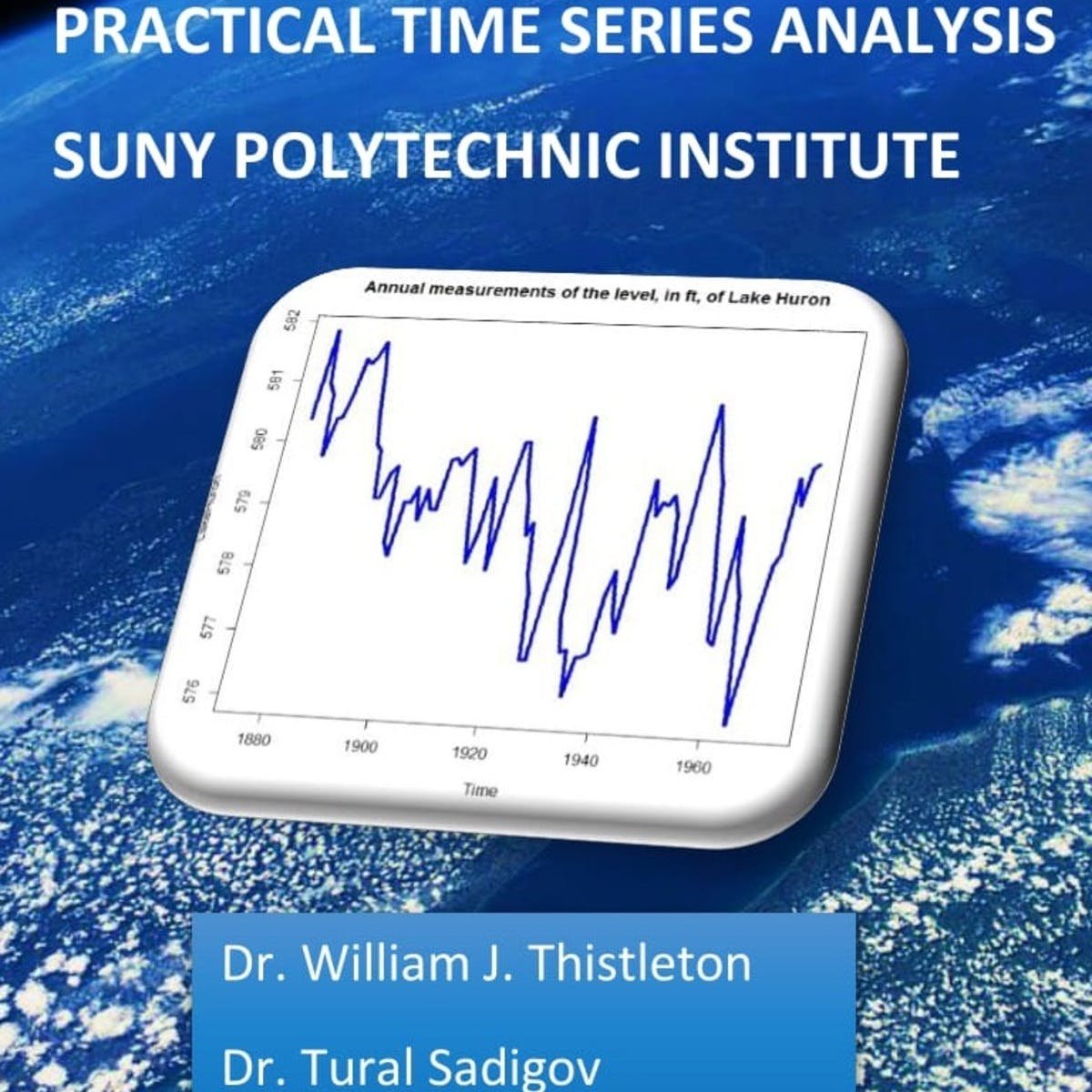
In the dynamic world of data, numbers tell a story. But too often, we only hear fragments. We look at sales figures, website visits, or energy consumption as isolated snapshots, missing the critical narrative thread that binds them: time. Understanding the Practical Applications of Date Series in Data Analysis and Reporting isn't just about crunching numbers; it's about unlocking foresight, revealing hidden rhythms, and making smarter, more proactive decisions.
Imagine knowing when your product demand will surge, anticipating a dip in customer engagement, or predicting the optimal time for system maintenance. This isn't magic; it's the power of date series analysis, a fundamental skill for anyone serious about extracting real value from data. It transforms raw historical observations into actionable intelligence, moving you beyond reactive responses to strategic foresight.
At a Glance: Harnessing the Power of Date Series
- Unlock Hidden Patterns: Discover trends, seasonal fluctuations, and cyclical behaviors that static data simply can't reveal.
- Predict the Future: Forecast key metrics like sales, traffic, or resource needs with greater accuracy, enabling proactive planning.
- Optimize Operations: Improve inventory management, schedule staffing efficiently, and fine-tune marketing campaigns.
- Understand Causality: Identify how events or interventions impact performance over time, moving beyond correlation.
- Enhance Reporting: Deliver richer, more insightful reports that explain why metrics are changing and what's next.
- Identify Anomalies: Spot unusual data points (outliers) that might indicate fraud, system errors, or emerging opportunities.
The Heartbeat of Data: Why Date Series Matter
Most data points don't exist in a vacuum. A sale made today is influenced by yesterday's marketing, last month's promotions, and last year's holiday season. A date series, often interchangeably called a "time series," is simply a sequence of data points indexed in chronological order. Unlike cross-sectional data, which captures a snapshot at a single point in time, a date series captures the evolution, the journey, the story.
Think of your company's monthly revenue. Viewed as a single number, it's just a metric. Viewed over a year, you start seeing spikes around holidays or consistent growth. Viewed over five years, you might discern economic cycles, the impact of new product launches, or the slow decline of an older offering. This temporal dimension is what allows us to identify:
- Trends: Long-term increases or decreases (e.g., steady growth in subscriber count).
- Seasonality: Patterns that repeat at fixed intervals (e.g., higher ice cream sales in summer, predictable quarterly financial reports).
- Cycles: Longer-term patterns not necessarily tied to calendar intervals, often related to economic or business cycles (e.g., industry-wide boom and bust periods).
- Irregular Components (Residuals): The unpredictable, random fluctuations that remain after accounting for trend, seasonality, and cycles. These can be noise or indicators of unique, one-off events.
Ignoring the temporal context is like trying to understand a novel by reading only random sentences. You'll miss the plot, the character development, and the overarching message.
Laying the Groundwork: Preprocessing Your Date Series for Clarity
Before you can build predictive models or extract meaningful insights, your date series often needs some careful preparation. Raw data rarely arrives in a pristine, analysis-ready state. This preprocessing phase is critical for enhancing data quality and ensuring your models aren't misled by noise or inconsistencies.
1. Ensuring Continuity and Handling Missing Dates
One of the first challenges with date series is often incomplete data. You might have sales data only for days with sales, or server logs that skip periods of inactivity. For robust analysis, you often need a complete sequence of dates.
- Filling Gaps: For many analytical techniques, a continuous date series is essential. If you're missing days, weeks, or months, you might need to insert those dates and then decide how to handle the corresponding missing values (e.g., fill with zeros if it's count data, or use interpolation for continuous metrics). If you're working with databases, you might find yourself needing to master techniques for generating SQL date range rows to ensure a contiguous data stream for your analysis.
- Imputation: Once you have a continuous series, you'll likely have
nullvalues for the newly inserted dates or existing gaps. Common imputation methods include: - Zero-filling: Simple, but can distort averages if zeros are not truly representative.
- Last Observation Carried Forward (LOCF): Assumes the value remains the same until a new observation appears.
- Linear Interpolation: Estimates missing values based on surrounding points.
- Mean/Median Imputation: Replaces missing values with the series' overall mean or median (use with caution, as it can suppress variability).
- More Sophisticated Methods: Using predictive models (like ARIMA) to forecast and backcast missing values.
2. Stabilizing Variance and Removing Trends: Differencing and Transformations
Many powerful date series models, like ARIMA, assume that the series is stationary. A stationary series has constant statistical properties (mean, variance, and autocorrelation) over time. Real-world data, with its trends and seasonality, is rarely stationary.
- Differencing: This is your primary tool for removing trends and making a series stationary.
- First Difference (∇Y_t = Y_t - Y_{t-1}): Subtracting the previous observation from the current one often removes linear trends. If your data is
[10, 12, 14, 16], the first difference is[2, 2, 2], which is stationary. - Seasonal Differencing (∇_s Y_t = Y_t - Y_{t-s}): If your data shows a strong seasonal pattern (e.g., yearly seasonality
s=12for monthly data), subtracting the observation from the same period last year can remove the seasonal component and often stabilize the mean. - You might need to apply differencing multiple times (e.g., a first difference of the first difference) if a single application isn't enough to achieve stationarity, though this is less common and should be carefully considered to avoid overfitting.
- Logarithmic or Box-Cox Transformations: These can help stabilize variance if it increases with the level of the series (e.g., fluctuations get larger as sales grow). A common example is applying a natural logarithm (ln) to convert multiplicative patterns into additive ones, making it easier for models to capture.
3. Decomposing and Adjusting for Seasonality
Seasonality is a double-edged sword: it provides predictable patterns but can also mask the underlying trend. Seasonal adjustment helps you peel back the layers to focus on what truly matters.
- Seasonal Decomposition: Methods like "Seasonal and Trend decomposition using Loess" (STL) or X-13ARIMA-SEATS break down a date series into its core components:
- Trend (T_t): The long-term progression.
- Seasonal (S_t): The repeating, calendar-related fluctuations.
- Residual (R_t): The leftover irregular component.
This allows you to analyze the trend separately, or to "deseasonalize" the data to look at the trend and irregular components combined. - Why Adjust? Removing seasonality can make it easier to identify turning points in the underlying trend, compare different periods accurately (e.g., quarter-over-quarter growth without seasonal bias), or simplify the modeling process.
4. Handling Outliers
Outliers are unusual data points that deviate significantly from the rest of the series. They can distort model estimations and lead to inaccurate forecasts.
- Detection: Visual inspection (line plots, box plots) is often the first step. Statistical methods like Z-scores, interquartile range (IQR), or more advanced anomaly detection algorithms can also identify outliers.
- Treatment:
- Removal: If the outlier is clearly an error, you might remove it (but be cautious about losing real information).
- Winsorizing: Limiting extreme values by replacing them with a specified percentile (e.g., replacing values above the 99th percentile with the 99th percentile value).
- Imputation: Replacing outliers with values estimated from surrounding data or a model (similar to handling missing values).
- Robust Models: Using models that are less sensitive to outliers (e.g., median-based methods instead of mean-based).
- Understanding: Sometimes, an outlier isn't an error but a significant event (e.g., a huge promotional success or a natural disaster). Understanding its cause is more important than simply removing it.
Building Predictive Engines: Models for Date Series
With your data preprocessed, you're ready to select and build models. The choice of model depends heavily on the characteristics of your data (presence of trend, seasonality) and your forecasting objectives.
1. Autoregressive Integrated Moving Average (ARIMA) and its Extensions
ARIMA models are a cornerstone of date series analysis, combining three core concepts:
- Autoregression (AR - 'p'): Uses past values of the series to predict the current value. It assumes that the current value is a linear combination of previous values.
- Integrated (I - 'd'): Refers to the differencing process used to make the series stationary. The 'd' value indicates the number of times differencing has been applied.
- Moving Average (MA - 'q'): Uses past forecast errors (residuals) to predict the current value. It accounts for the impact of previous random shocks on the current observation.
An ARIMA model is typically denoted as ARIMA(p, d, q). - SARIMA (Seasonal ARIMA): An extension of ARIMA that explicitly handles seasonality. It adds seasonal components (P, D, Q, S) to the ARIMA model, becoming SARIMA(p, d, q)(P, D, Q)S.
P: Seasonal autoregressive order.D: Seasonal differencing order.Q: Seasonal moving average order.S: Number of periods in a season (e.g., 12 for monthly data with yearly seasonality).
When to Use: ARIMA/SARIMA are excellent for capturing complex linear relationships in data with trends and seasonality, especially when you have a reasonably long history of stationary data. They require careful identification of p, d, q, P, D, Q parameters, often through analyzing Autocorrelation Function (ACF) and Partial Autocorrelation Function (PACF) plots.
2. Exponential Smoothing Methods
Exponential smoothing models are popular for their intuitive nature and often strong performance, especially for shorter-term forecasts. They give exponentially decreasing weights to older observations, meaning more recent data has a greater impact on the forecast.
- Simple Exponential Smoothing (SES): Suitable for data with no clear trend or seasonality. It uses a single smoothing parameter (α) to weight the most recent observation.
- Holt's Linear Trend Method: Extends SES by adding a component for trend, allowing for forecasting data with a linear trend but no seasonality. It uses two smoothing parameters: α (for level) and β (for trend).
- Holt-Winters Seasonal Method: The most comprehensive of the exponential smoothing family, capable of handling both trend and seasonality. It uses three smoothing parameters: α (for level), β (for trend), and γ (for seasonality). Holt-Winters can be either additive (seasonality adds to the trend) or multiplicative (seasonality scales with the trend), depending on the nature of your seasonal pattern.
When to Use: Exponential smoothing methods are generally simpler to implement than ARIMA models and often perform well for forecasting, particularly when the underlying patterns are relatively stable. They are less explicit about the structure of the time series but are very effective for short-to-medium term predictions.
3. Other Models and Approaches
- Prophet (from Facebook): A highly flexible forecasting procedure designed for business forecasts, especially those with strong seasonal components, multiple seasons, and the potential for holidays or irregular events. It's robust to missing data and shifts in the trend.
- Machine Learning Models: For more complex, non-linear relationships or when external features (exogenous variables) play a significant role, models like Random Forests, Gradient Boosting Machines (XGBoost, LightGBM), or even deep learning models (LSTMs, Transformers) can be adapted for date series forecasting. These often require careful feature engineering (e.g., creating lag features, rolling averages, Fourier terms for seasonality).
- ARMAX/SARIMAX: Extensions of ARIMA/SARIMA that include exogenous (external) variables, allowing you to incorporate other factors that might influence your series (e.g., advertising spend influencing sales).
Parameter Estimation Techniques
Once you've chosen a model type, you need to estimate its parameters.
- Maximum Likelihood Estimation (MLE): The most common method, which finds the parameter values that maximize the probability of observing the actual data. MLE provides statistically optimal estimates under certain assumptions.
- Bayesian Methods: Incorporate prior knowledge about parameters along with the observed data to produce a posterior probability distribution for the parameters. This is particularly useful when you have limited data or strong prior beliefs, and it provides a more complete picture of parameter uncertainty. Markov Chain Monte Carlo (MCMC) methods are often used to sample from these complex distributions.
Validating Your Crystal Ball: Model Assessment
Building a model is only half the battle. You need to know if it's actually any good. Model validation and diagnostic testing are crucial steps to ensure your model accurately captures the data's dynamics and provides reliable forecasts.
1. Residual Analysis
Residuals are the differences between your observed data points and the values predicted by your model. For a well-specified model, residuals should ideally resemble "white noise"—meaning they are random, have a zero mean, constant variance, and no autocorrelation.
- Plotting Residuals: Visually inspect residual plots for:
- Trends or Patterns: If residuals show a pattern, your model hasn't fully captured the underlying dynamics.
- Non-Constant Variance (Heteroscedasticity): If the spread of residuals changes over time, it indicates a problem with the model's assumptions (e.g., needing a transformation).
- Outliers: Large residual values might point to unhandled outliers or unique events.
- Autocorrelation of Residuals: Use the Autocorrelation Function (ACF) and Partial Autocorrelation Function (PACF) plots of your residuals. If there's significant autocorrelation in the residuals, your model hasn't captured all the information in the past errors, and it could be improved. The Ljung-Box test is a formal statistical test for overall autocorrelation in residuals.
2. Goodness-of-Fit Metrics
These metrics quantify how well your model explains the historical data it was trained on.
- Akaike Information Criterion (AIC) and Bayesian Information Criterion (BIC): These are common for model selection. They penalize models for having more parameters, striking a balance between model fit and complexity. Generally, lower AIC/BIC values indicate a better model.
- Root Mean Squared Error (RMSE): Measures the average magnitude of the errors. It gives more weight to larger errors, as the errors are squared before they are averaged.
3. Forecast Accuracy Measures
These metrics assess how well your model predicts new, unseen data. It's crucial to evaluate models on a "holdout" or "test" set that the model hasn't seen during training.
- Mean Absolute Error (MAE): The average of the absolute differences between actual and forecasted values. It's easy to interpret as it's in the same units as the data.
- Mean Squared Error (MSE): The average of the squared differences. Similar to RMSE, it penalizes larger errors more heavily.
- Mean Absolute Percentage Error (MAPE): Expresses accuracy as a percentage. It's useful for comparing the accuracy of forecasts for different series that have different scales, but it can be problematic with zeros or very small actual values.
- Symmetric Mean Absolute Percentage Error (SMAPE): A variation of MAPE that addresses some of its limitations, particularly with zeros.
The choice of metric often depends on the business context. For instance, if large errors are particularly costly, RMSE or MSE might be preferred. If relative error across different series is important, MAPE could be suitable.
Real-World Impact: Practical Applications in Action
The ability to analyze and forecast date series isn't merely an academic exercise; it's a strategic imperative across virtually every industry. Here’s where date series analysis truly shines:
1. Economic Forecasting and Policy Making
Governments, central banks, and financial institutions rely heavily on date series analysis to understand and predict economic health.
- GDP Growth: Analyzing historical Gross Domestic Product (GDP) data to forecast future economic expansion or contraction, informing fiscal and monetary policy decisions.
- Inflation Rates: Tracking the Consumer Price Index (CPI) as a date series to predict future inflation, which directly impacts interest rates, purchasing power, and investment strategies. Models like GARCH (Generalized Autoregressive Conditional Heteroscedasticity) can be used to model and forecast volatility in financial time series, which is crucial for risk management.
- Unemployment Rates: Forecasting changes in employment levels to anticipate labor market trends and guide social programs.
- Interest Rates: Central banks use time series models to predict optimal interest rates that balance inflation and economic growth.
- Market Analysis: Financial analysts use date series to predict stock prices, commodity futures, and currency exchange rates, though these are notoriously challenging due to market volatility and external factors.
Mini Case Snippet: A national bank uses SARIMA models on quarterly GDP data to predict economic slowdowns, allowing them to adjust lending rates and financial regulations proactively to stabilize the economy.
2. Inventory Management and Supply Chain Optimization
For businesses dealing with physical goods, effective inventory management is a delicate balancing act: too much stock ties up capital and risks obsolescence; too little leads to lost sales and customer dissatisfaction. Date series analysis provides the precision needed.
- Seasonal Demand Forecasting: Retailers use historical sales data to forecast seasonal peaks (e.g., holiday shopping, summer clothing) and troughs. Exponential smoothing methods (especially Holt-Winters) are very effective here. This allows them to:
- Order the right quantities of raw materials or finished products.
- Schedule production runs to meet anticipated demand.
- Optimize warehouse staffing.
- Plan marketing campaigns to align with demand cycles.
- Lead Time Prediction: Forecasting the time it takes for suppliers to deliver goods, allowing for more accurate reorder points.
- Perishable Goods Management: For items with a short shelf life (food, flowers), precise demand forecasting minimizes waste and maximizes freshness.
Mini Case Snippet: A large grocery chain analyzes daily sales data for fresh produce using Holt-Winters. By accurately predicting peak demand days and times, they reduce spoilage by 15% and ensure shelves are stocked during busy hours, improving customer satisfaction.
3. Risk Assessment and Financial Portfolio Management
In finance and insurance, date series analysis is fundamental to understanding and mitigating risk.
- Volatility Estimation: Financial institutions use historical asset price movements to estimate volatility (e.g., using GARCH models), which is a key input for options pricing, risk management (Value at Risk - VaR), and portfolio optimization.
- Fraud Detection: Analyzing transaction date series can identify unusual patterns or anomalies that may indicate fraudulent activity (e.g., a sudden spike in transactions from a dormant account).
- Credit Risk Scoring: Predicting the likelihood of loan default by analyzing historical payment patterns and other financial date series associated with borrowers.
- Insurance Claim Prediction: Insurance companies use historical claim data to forecast future claims, helping them set premiums and manage reserves.
Mini Case Snippet: An investment firm employs a GARCH model to estimate the daily volatility of a stock portfolio. This information allows them to dynamically adjust their hedging strategies, protecting against extreme market swings.
4. Resource Allocation and Workforce Planning
Efficiently allocating resources—whether it's electricity, server capacity, or human staff—is crucial for operational efficiency and cost control.
- Energy Load Forecasting: Utility companies predict electricity demand hours, days, or weeks in advance using date series models that account for weather, time of day, and seasonal factors. Accurate forecasts prevent blackouts and optimize power generation.
- Staffing Levels: Call centers, hospitals, and retail stores use historical call volumes, patient admissions, or foot traffic data to forecast staffing needs, ensuring adequate coverage without overspending on labor.
- Network Capacity Planning: Telecommunication companies predict data traffic surges to proactively upgrade infrastructure and prevent service disruptions.
Mini Case Snippet: A hospital uses SARIMA models on hourly patient admission data to predict peak demand for emergency room staff. This allows them to optimize shift schedules, reducing patient wait times and improving overall care quality.
5. Marketing, Sales, and Customer Behavior Analytics
Understanding how customers interact with your products and services over time is vital for effective marketing and sales strategies.
- Campaign Performance: Analyzing website traffic, conversion rates, or social media engagement as date series to understand the immediate and long-term impact of marketing campaigns.
- Sales Forecasting: Beyond inventory, sales forecasting helps set targets, manage commissions, and identify growth opportunities.
- Customer Churn Prediction: Tracking customer activity and engagement over time to predict when a customer is likely to churn, allowing for targeted retention efforts.
- A/B Testing Analysis: Monitoring metrics like conversion rates as date series during A/B tests to identify significant differences and confirm the impact of changes over time.
Mini Case Snippet: An e-commerce company uses exponential smoothing to forecast daily website traffic. This helps them plan server capacity, schedule maintenance during low-traffic periods, and optimize promotional email sends for maximum impact.
Equipping Your Toolbox: Learning Environment & Tools
The good news is that powerful tools for date series analysis are more accessible than ever.
- R Language: A powerhouse for statistical computing and graphics, R offers a vast ecosystem of packages specifically designed for time series analysis (e.g.,
forecast,tslm,lubridate,tseries). It's widely used in academia and industry. - Python: With libraries like
pandas(for data manipulation, especially with datetime objects),statsmodels(for ARIMA, exponential smoothing),sktime(for scikit-learn compatible time series tools), andProphet(Facebook's forecasting tool), Python has become a leading language for data science, including date series analysis. - Specialized Software: Tools like SAS, SPSS, Stata, and MATLAB also offer robust time series capabilities, often with user-friendly interfaces.
- BI Tools: Modern Business Intelligence (BI) platforms often integrate basic time series visualizations and forecasting functionalities, making it easier for business users to interact with and understand date-driven insights.
Regardless of your chosen tool, key learning resources include online courses (e.g., on platforms like Coursera, edX, DataCamp), comprehensive documentation, and community forums. Hands-on practice with real-world datasets is indispensable.
Your Next Steps: From Theory to Action
The journey from raw data to actionable foresight through date series analysis is incredibly rewarding. It’s a skill that empowers you to look beyond the present moment and anticipate what’s coming, turning uncertainty into a strategic advantage.
Here's how you can start putting these concepts into practice:
- Identify a Problem: Begin with a clear business question that involves a temporal element. "When will our sales peak next quarter?" or "What's the expected demand for product X next month?"
- Gather Your Data: Collect historical data that includes a date or time stamp. Ensure it's granular enough for your analysis (e.g., daily sales for weekly forecasts).
- Explore and Visualize: Plot your data over time. Look for trends, seasonality, and obvious outliers. This initial visual inspection is invaluable.
- Preprocess: Address missing dates, handle outliers, and apply differencing or transformations to achieve stationarity if necessary.
- Choose a Model: Based on your data's characteristics and your forecasting horizon, select an appropriate model (e.g., Holt-Winters for seasonal data with trend, SARIMA for complex patterns).
- Train and Validate: Develop your model on a training dataset and rigorously test its performance on a holdout set using appropriate accuracy metrics.
- Forecast and Interpret: Generate your forecasts and, critically, interpret them in the context of your business problem. Communicate not just the numbers, but the story they tell.
- Iterate and Refine: Date series analysis is rarely a one-shot process. Continuously monitor your model's performance, refine parameters, and adapt to changing conditions.
Embrace the temporal dimension of your data. The ability to understand and predict patterns over time is no longer a niche skill; it’s a cornerstone of data-driven decision-making that will set you apart.